

January 26, 2024
All of us have heard of St. Paul, but how many have heard of St. Paula?
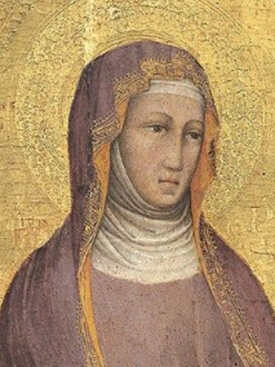 In her day — from 350 to the turn of the century — she was famous in Rome, a descendant of heroes of the Republic, Scipio Africanus and the Gracchi. She and her family were Christians, and when she was 15, she married the senator Toxotius, who came from another distinguished family.
The couple, who loved each other dearly, had five children — a son and four daughters, two of whom became saints, Blaesilla, who died at a young age, and Eustochium. When Paula was 32, her husband died and she was overcome by a debilitating grief. And then her close friend, St. Marcella, who had recently been widowed, tried to console her and offer her another opportunity in life by introducing her to St. Jerome, a priest who would eventually translate the Vulgate Bible. As a spiritual director, Jerome advised Paula on her future. Once he realized she could speak Greek, he sought her assistance in reading Greek texts of Sacred Scripture for his Latin translation of the Bible. She worked with him until the end of her life.
She later financed his move to Bethlehem, along with the construction of a monastery, convents, a school and hospital. While there, she studied Hebrew to further assist Jerome in his translation, and in large part, the project would not have been possible without her assistance, along with that of her daughter Eustochium, both of whom “copied the work so it could be shared far and wide.”
When she died on January 26, 404, Jerome had her buried under the altar at the Church of the Nativity. Her feast is observed on January 26, and we venerate her as patron saint of widows.
***
Sign Up for Healing Journey Messages
Receive a daily message to your email address.