

January 23, 2024
“Their grief is in proportion to their affection,
they know their loss to be irreparable”
— Jane Austen’s tombstone
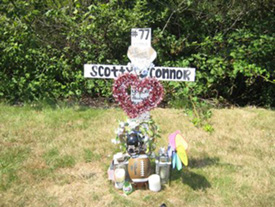 Although roadside memorials are a relatively recent phenomenon in the United States, they have existed for centuries in different cultures, particularly when it was common to bury a person where they died, especially if it occurred unexpectedly while on a trip away from home.
Unlike headstones on a grave, these memorials show the place where the person was last alive. Friends and family members, in their grief, typically place a cross, flowers, wreaths, signs, mementos, or personal effects on the site. Many others, as a tribute to the deceased, will leave personal messages. Others may have inscriptions on plaques that showed where an accident occurred on a hiking trip or while climbing a mountain. If someone has died in a cycling accident, there is also the practice of placing what is called a “ghost bike” there, which is a bike that has been painted white and has been adorned with an inscription and flowers. In the 1950s, Arizona would mark the location of a fatal accident with a cross.
Today, the practice continues when a celebrity or person of renown dies in a public place and fans leave behind bouquets of flowers with heartfelt mementos of the person’s life.
All these practices are a way of expressing grief in a public way, and they are done in many different cultures worldwide.
***
Sign Up for Healing Journey Messages
Receive a daily message to your email address.